

Questions this work can help management answer.
- Is there a clear opening price point and a credible core offer?
- Are premium steps visible and supported by a meaningful product difference?
- Do pack-size relationships create logical or confusing unit-price signals?
- Which items act as key price references for shoppers or competitors?
- Where do regular and promotional prices create inconsistent ladders?
- How should price architecture differ across categories, channels, or store formats?
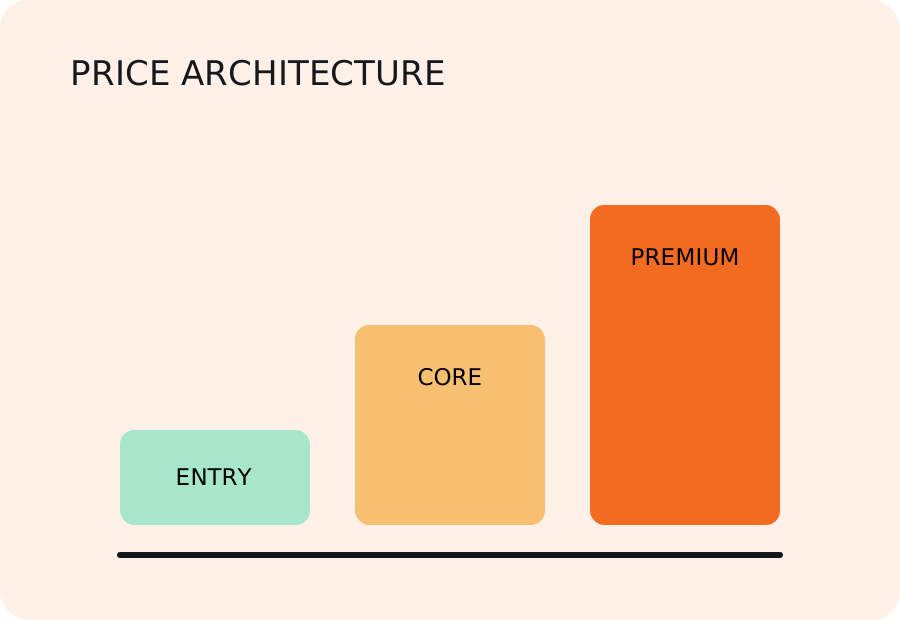
Typical workstreams.
Current ladder map
Organize regular shelf prices into relevant tiers, pack relationships, and key reference points.
Architecture principles
Define entry, core, premium, private-label, brand, and pack-size logic appropriate to the category.
Gap analysis
Identify compressed tiers, unexplained gaps, inconsistent pack relationships, or price points that deserve management review.
Implementation guidance
Organize decision rules, exceptions, competitor references, and questions for commercial teams.
Potential deliverables.
The exact deliverables depend on scope, store/channel context, available data, fixtures, and the decision management needs to make.
What makes the work practical.
Recommendations should be specific enough for category, commercial, store, space-planning, or operations teams to understand the logic, identify exceptions, and decide how to implement or test the change.