

Questions this work can help management answer.
- What role does the category play in the proposition?
- Which shopper needs and subcategories require deliberate coverage?
- Where do SKUs duplicate rather than extend meaningful choice?
- How do brands, private label, price tiers, pack sizes, and variants fit together?
- Which items are strategically important even if simple volume ranking would understate their role?
- What operational, supplier, contractual, or transition risks must be considered before change?
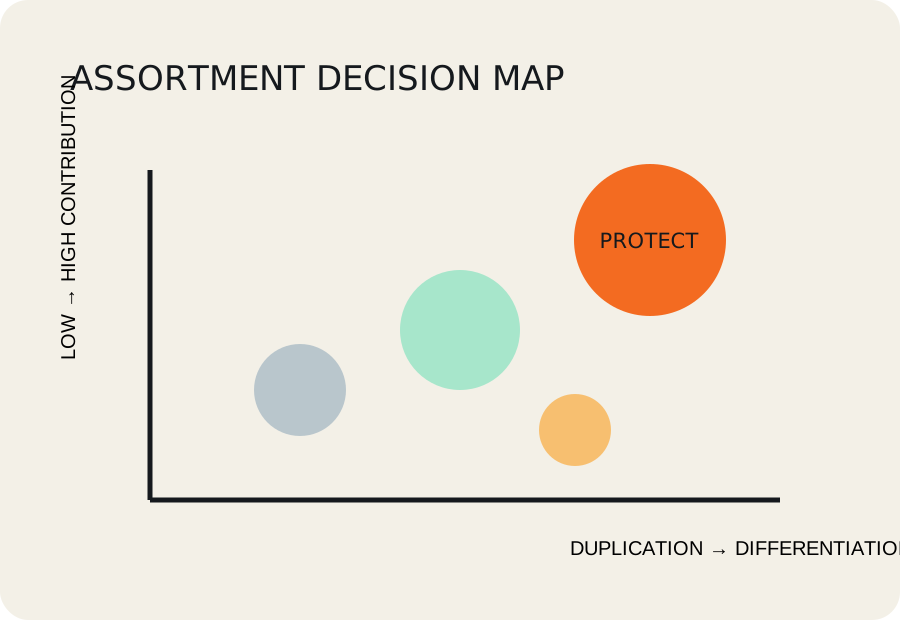
Typical workstreams.
Category architecture
Define category role, subcategory structure, shopper needs, tiers, formats, pack sizes, and decision boundaries.
Range diagnostic
Review coverage, duplication, gaps, item roles, and available commercial evidence.
Rationalization logic
Develop decision rules for keep/add/review/remove conversations without treating SKU count reduction as the objective by itself.
Transition considerations
Identify supplier, inventory, shelf, communication, system, and implementation questions that management should resolve.
Potential deliverables.
The exact deliverables depend on scope, store/channel context, available data, fixtures, and the decision management needs to make.
What makes the work practical.
Recommendations should be specific enough for category, commercial, store, space-planning, or operations teams to understand the logic, identify exceptions, and decide how to implement or test the change.