

Questions this work can help management answer.
- Which items are core, seasonal, local, value, premium, or occasion-driven?
- How should assortment width change with season, store size, or availability?
- What display density creates abundance without creating unnecessary waste risk?
- How should color, product type, use occasion, or price help shoppers navigate?
- Which adjacencies support the shopper mission and the operating workflow?
- How should availability, rotation, quality, and pricing be reviewed together?
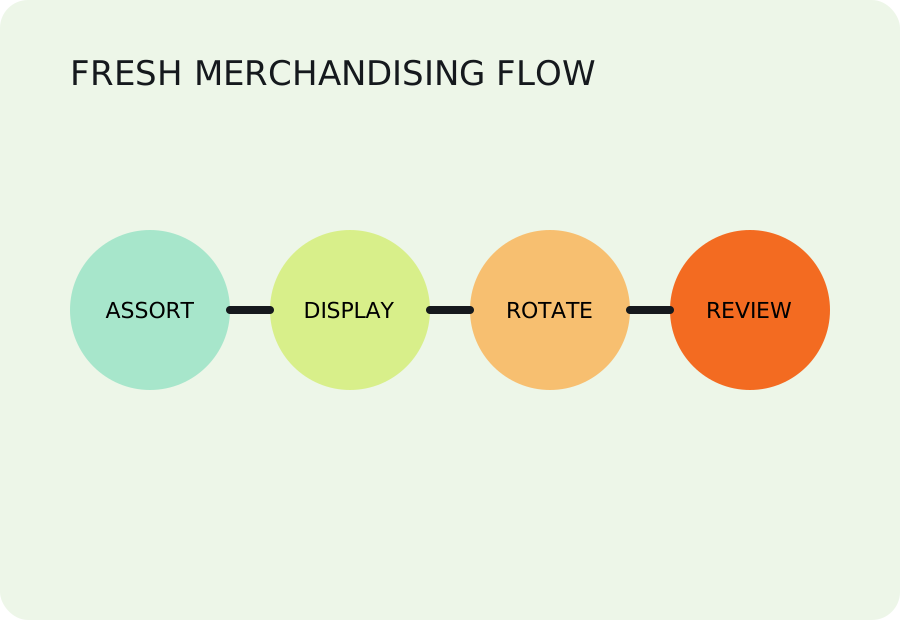
Typical workstreams.
Fresh range architecture
Define core, seasonal, premium, value, local, and occasion roles within the assortment.
Display principles
Set guidance for abundance, color flow, fixtures, navigation, signage, and shopper comparison.
Rotation & availability
Connect presentation standards with replenishment, shelf life, quality, and waste-risk considerations.
Seasonal playbook
Organize how assortment and display priorities change across relevant seasonal or promotional periods.
Potential deliverables.
The exact deliverables depend on scope, store/channel context, available data, fixtures, and the decision management needs to make.
Fresh assortment roles
Display principles
Seasonal priorities
Adjacency guidance
Rotation considerations
Availability checklist
Price/display communication rules
Review scorecard
Scope note: Food safety, temperature control, sanitation, regulatory compliance, and product-handling requirements should be managed by appropriately qualified operational, food-safety, and regulatory professionals. This service focuses on merchandising decisions.
What makes the work practical.
Recommendations should be specific enough for category, commercial, store, space-planning, or operations teams to understand the logic, identify exceptions, and decide how to implement or test the change.